
QUISHA
-
THE HOOKAH QUEEN WHO TURNS LIFE INTO ANTHEMS
-
QUISHA - THE HOOKAH QUEEN WHO TURNS LIFE INTO ANTHEMS -
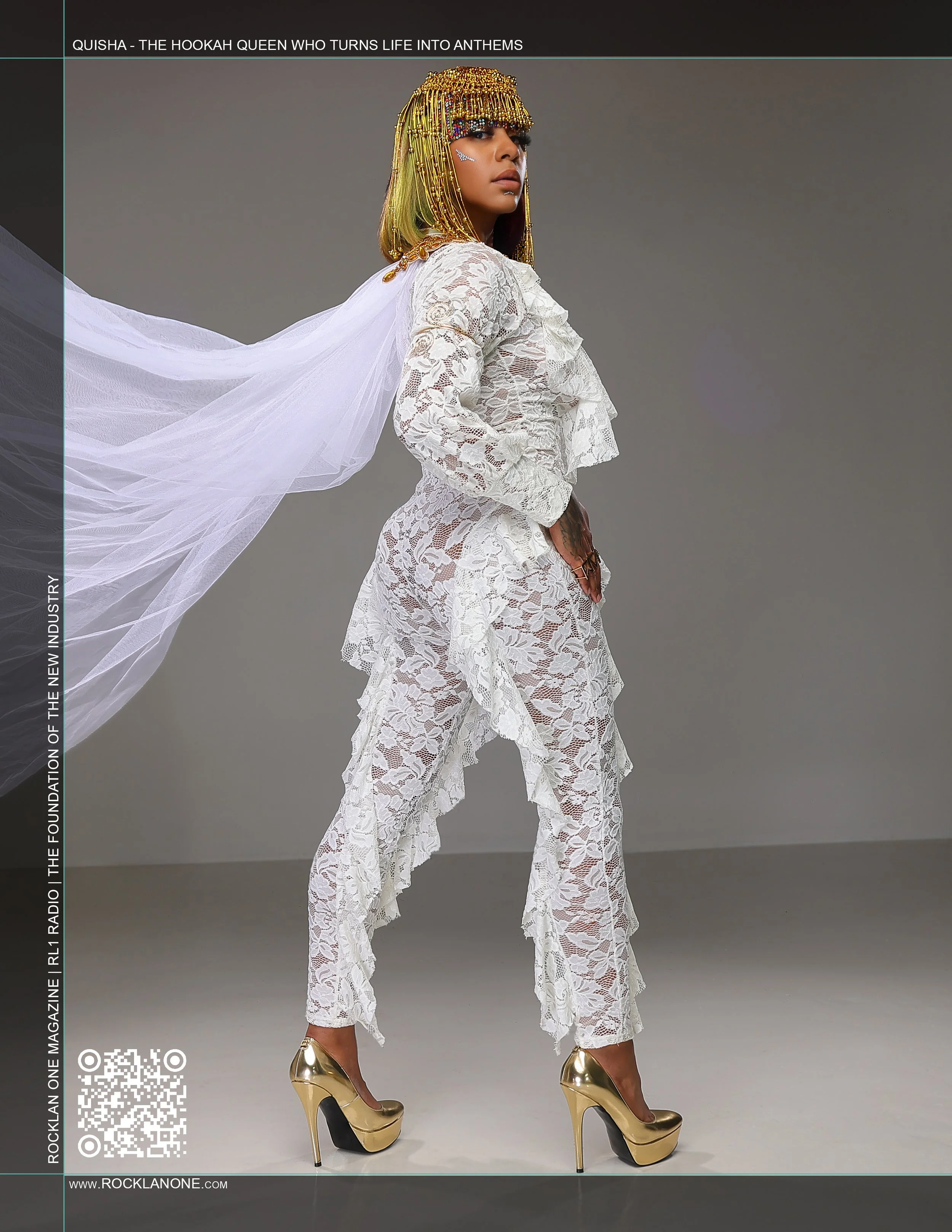
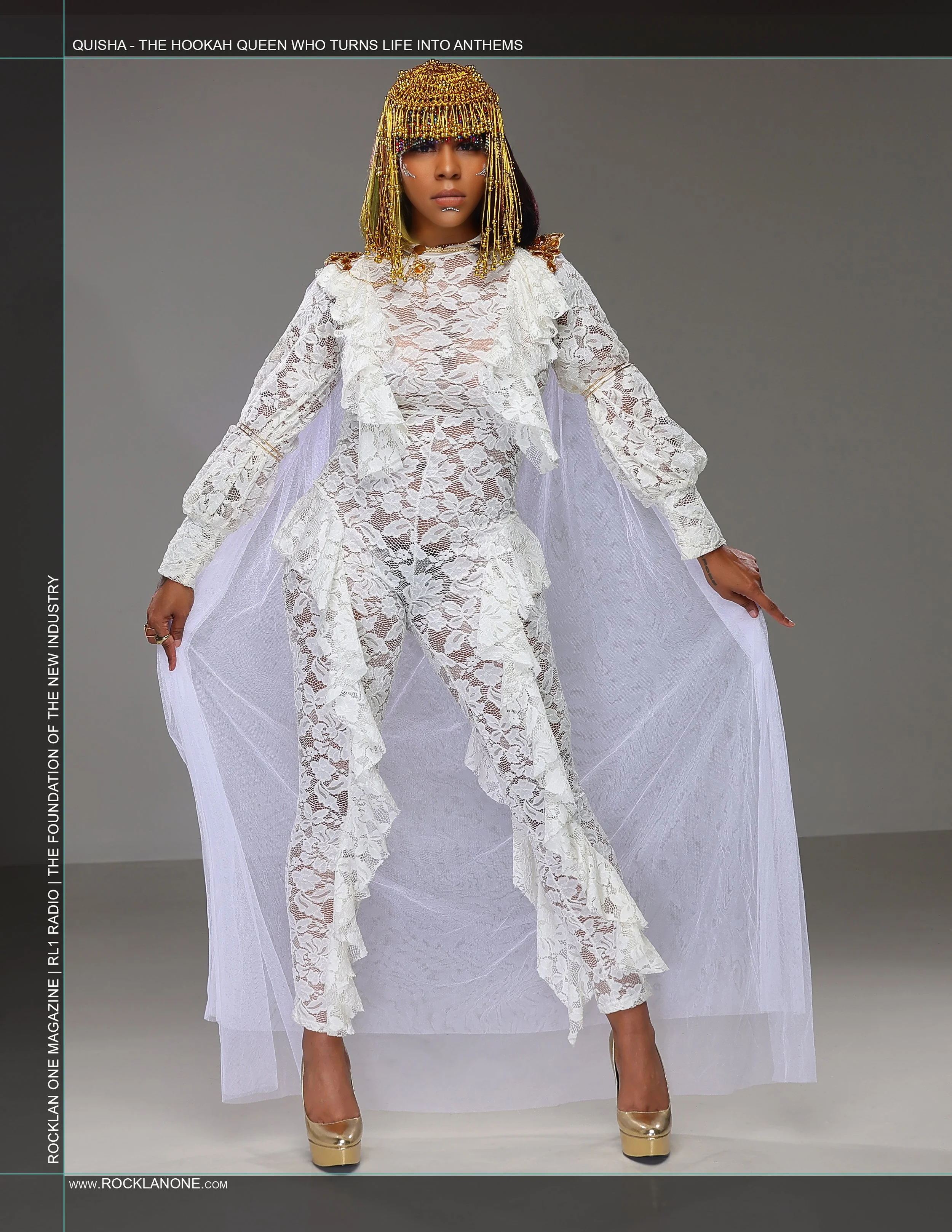
Quisha: The Hookah Queen Who Turns Life Into Anthems
RockLan One Editorial
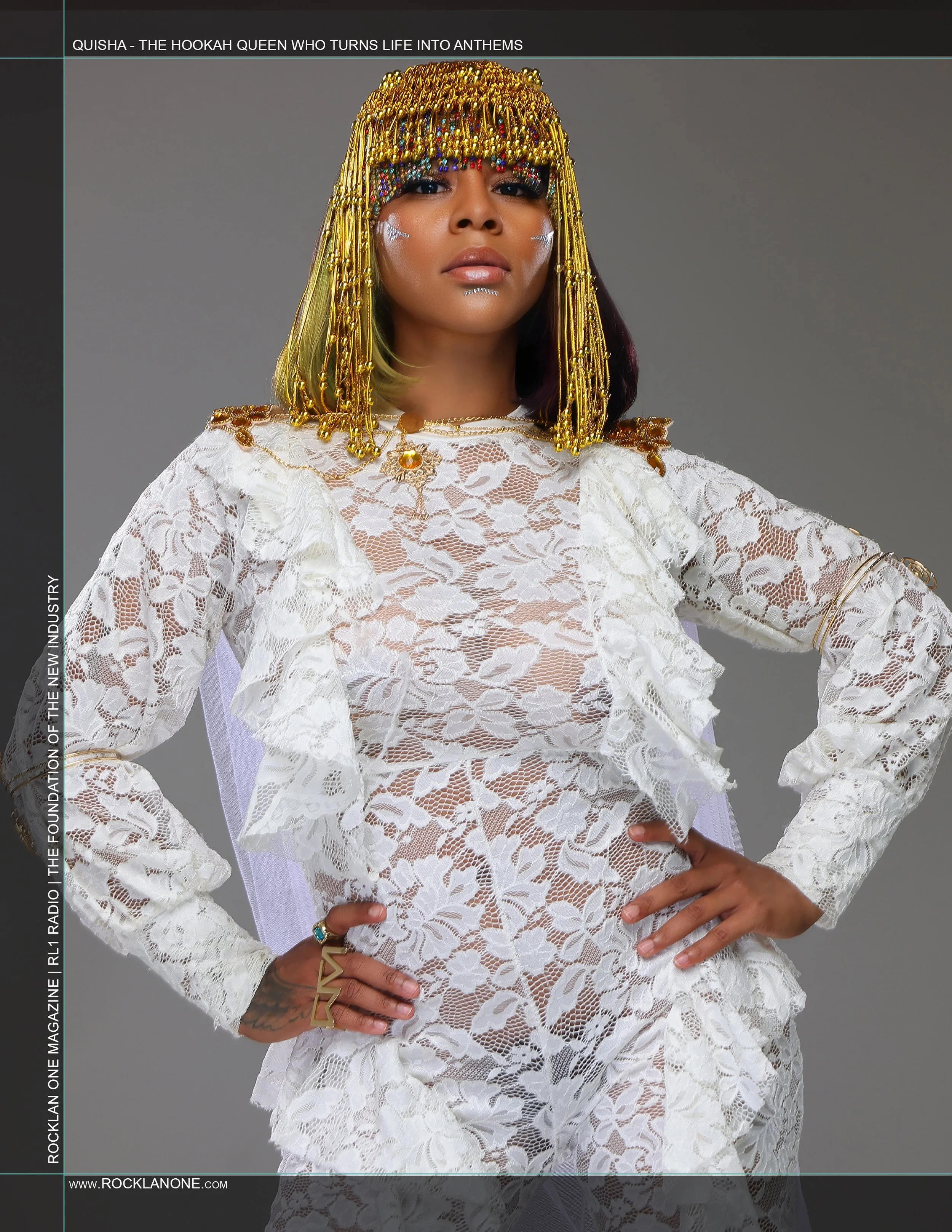
There are artists who walk into a room quietly, blending into the noise of the world, and then there are artists who arrive like a spark and shift the energy before they even say a word. Quisha is the latter. Known on the scene as the Hookah Queen and the Showstopper, she is the type of artist who understands the power of presence. She is part entertainer, part motivator, and part cultural anomaly, refusing to fit neatly into any one lane. To watch her perform is to witness someone who is not just singing or rapping but commanding, creating an environment where the crowd feels uplifted and electrified at the same time. Her confidence and performance style are not accidents. They are the result of a life shaped by movement, struggle, survival, and reinvention, a journey that has made her voice as distinctive as her story.
From Jacksonville Roots to Atlanta Soul
Quisha’s life began in Jacksonville, Florida, but she does not hesitate to say that Atlanta raised her. Her childhood shifted dramatically when her mother remarried and relocated the family to Atlanta, planting them in the Adamsville community near Fairburn Road. It was a culture shock, but also the beginning of a new identity. “I was a chicken nugget when we got here,” she says, describing herself as young, small, and still learning the world. What followed were years of constant moving, College Park, Smyrna, the South Side, and in each neighborhood she picked up pieces of experience that became part of her character. “We never stayed put for long,” she remembers. “But every side of Atlanta gave me a piece of who I am.” That ability to adapt and adjust made her resilient, flexible, and attuned to different kinds of people. If she had to choose one place that truly represents her, there is no hesitation: College Park. For Quisha, the South Side is home, a place that shaped her teenage years and grounded her in a culture of grit and creativity. “College Park raised me the most,” she says. “That’s where I really came into myself.”
Raised by Music
Music has been a thread woven into Quisha’s life since before she could talk. Her earliest memories are tied to the sounds of vinyl records spinning in her grandmother’s and mother’s living room. She grew up surrounded by the timeless voices of Michael Jackson, Teddy Pendergrass, and Anita Baker, music that did not just entertain but taught her about emotion, passion, and the art of storytelling. At the same time, her uncles pushed a completely different palette of sounds through the speakers, Sting, Seal, and other artists with global appeal that expanded her perspective beyond soul and R&B into pop and alternative. “I did not even realize it at the time, but they were training my ear to hear the world differently,” she says. That combination of classic soul and eclectic international influences gave Quisha her foundation. By the age of three, she was already singing, by four, she was experimenting with her own melodies. She describes music not as something she found, but something that was embedded in her DNA. Today, when people ask her to define her sound, she calls it refreshing. It is not just new for the sake of new, it is layered, rooted in her upbringing, and impossible to pin down to a single category. “Nobody sounds like me,” she says with conviction. “And that’s because my sound comes from so many places at once.”
Performance as an Experience
For Quisha, music does not end with what happens in the studio. The stage is where her artistry comes alive, and she approaches every performance like it is a sacred moment. “When people come to see me, I do not want them to just watch me,” she explains. “I want them to feel me. It should be like a pep rally, a celebration where everyone’s energy rises together.” Her shows are high-octane, carefully crafted experiences, but what makes them truly unique is her ability to connect with the audience. She is not afraid to be vulnerable, playful, or commanding all in the same set. To describe her place among other performers, she uses a striking metaphor: “I am like a pink zebra among horses.” It is an image that perfectly captures her presence, unusual, rare, and impossible to ignore. “You came expecting one thing,” she says, “but when I perform, you realize you have never seen anything like this before.” That difference is her strength, and it is what keeps audiences talking long after the show ends.
The Music: Lessons in Sound and Survival
Quisha’s catalog of music reflects a woman who has turned everyday experiences into universal lessons and stories of empowerment. Each song carries a piece of her life, often born from moments that were challenging, frustrating, or unexpectedly inspiring, but always transformed into something greater through her creativity. Her writing is deeply autobiographical, drawing on real encounters, personal battles, and quiet reflections, yet she crafts them in a way that allows listeners to see themselves inside the lyrics. Whether she is pulling from heartbreak, spiritual breakthroughs, or random confrontations that spark a wave of emotion, Quisha transforms raw experiences into polished art that resonates widely. Her catalog is more than a collection of songs, it is a living diary and testimony of survival, growth, and determination.
Her 2025 single Arnold Palmer takes the old cliché “when life gives you lemons, make lemonade” and pushes it further with a Southern twist. “Why stop at lemonade when you can squeeze harder and make something even better,” she asks. For Quisha, that “something better” is an Arnold Palmer, the perfect blend of sweet tea and lemonade that is deeply rooted in Southern culture and summer tradition. She explains that the drink is symbolic, representing resilience, creativity, and the refusal to accept the bare minimum. “It is about not settling,” she says. “If life tests you, push harder and make the best out of it, because with determination you can create something richer, sweeter, and more fulfilling than what was handed to you.”
Another track, Heroic, was written in the wake of the pandemic and serves as both an anthem and a mirror. The song is directed toward women but also toward herself, making it a deeply personal yet widely relatable declaration. “It is a reminder that you are a superhero, even when you do not feel like it,” she explains. “I had to write that song to remind myself of my own power. It was me putting my cape back on.” Beyond the lyrics, the production carries triumphant chords and bold percussion that feel cinematic, giving the listener a sense of rising above adversity. Quisha describes the recording sessions as healing, moments where she could pour out her fears and transform them into something uplifting. When she first performed Heroic live, she recalls women in the audience crying and shouting the words back at her, proof that the track had struck a collective chord. For her, the song is not just music, it is a mantra that continues to guide her through challenges.
Then there is Mosh Pit, a song that perfectly demonstrates how Quisha transforms experiences into art and channels raw emotion into powerful sound. The track was inspired by a tense exchange with a woman at a Kroger self-checkout that escalated quickly and left her shaken. “That lady activated something in me,” Quisha recalls. She left the store fuming, got into her car, turned on a beat, and the words flowed out almost without thought. What resulted was a high-energy track about standing your ground, unleashing your energy, and refusing to let anyone diminish your power. The production features pounding drums and aggressive bass lines that mimic the chaos and adrenaline of an actual mosh pit, creating a sonic environment that matches the emotion behind the lyrics. When she performs it live, the crowd reacts with the same energy, jumping and moving as if they were in the middle of a rock concert. For Quisha, Mosh Pit is proof that even a small, ordinary moment can spark art that resonates universally. “That is the beauty of inspiration,” she says. “Sometimes an ordinary moment flips into a song that speaks to everybody, and suddenly that frustration becomes fuel for empowerment.”
Metamorphosis: Becoming the Butterfly
Quisha’s upcoming project, Metamorphosis, is the clearest reflection of her journey yet and the one she describes as her most vulnerable body of work to date. Inspired by the natural transformation of a caterpillar into a butterfly, the project is an honest and unfiltered look at growth, struggle, and triumph, capturing the raw emotions that come with each stage of change. “People love to celebrate the butterfly, but they forget the process it took to get there,” she explains. “This project is about that transition, heartbreak, betrayal, fasting, rebuilding, and rediscovering yourself.” Beyond the lyrics, the sound of Metamorphosis is designed to mirror that journey, shifting from darker tones of pain and isolation into brighter, soaring arrangements that embody freedom and renewal. The project is not only Quisha’s testimony, but also an invitation for listeners to reflect on their own seasons of transformation.
The title carries intentional weight and layers of meaning. On one level, it highlights her personal transformation, breaking down and rebuilding herself in the face of adversity while also reminding listeners that the path to growth is not smooth or glamorous. It is slow, messy, painful, and often overlooked, yet essential. Quisha compares the process to the unseen struggle inside the cocoon, where the caterpillar breaks itself down before re-emerging renewed. “Metamorphosis is about surviving the in-between,” she says. “It is about what it takes to crawl before you fly, about honoring the process that people rarely celebrate, and recognizing that true beauty comes after enduring the hardest stages of change.”
Much of the project was written during a ninety-day fast Quisha undertook, a season where she stripped away distractions, leaned into spirituality, and confronted herself honestly. During that time she limited her diet, avoided social media, and spent long hours in meditation and journaling, forcing herself to face truths she had previously avoided. “I went into that fast as one person and came out as another,” she says. The discipline gave her clarity, sharpened her creativity, and poured directly into her songwriting. Metamorphosis captures that journey, her cocoon season, and delivers it as both a diary and a roadmap for anyone who finds themselves in transition, showing that spiritual and artistic breakthroughs often come when you are willing to strip life down to its simplest form.
The Challenges of Being a Woman in Hip Hop
Despite her talent and drive, Quisha has faced challenges that come not from her music but from the industry’s double standards. “When a man speaks up, he is respected as a leader. When a woman speaks up, she is labeled as arrogant or difficult,” she says. Her confidence, the same confidence that fuels her artistry, has often been misinterpreted. But for Quisha, there is no room for timidity in hip hop. “This game will eat you alive if you are timid,” she says. “You have to demand respect, and you have to stand on your work.”
She recognizes that her presence as a Black woman in hip hop carries added weight. “I want to be respected in the same light as a man who works just as hard,” she explains. “If he is praised for being strong and vocal, then I should be too.” For Quisha, challenging those perceptions is not just about her career but about opening the door wider for the next wave of women artists.
Atlanta in Her DNA
Though she was born in Jacksonville, Quisha is quick to point out that Atlanta made her who she is. “Atlanta is not just where I live, it is who I am,” she says. From the food to the culture, from the way people walk and talk to the music that fills the streets, Atlanta has shaped every part of her.
Her earliest memories of Atlanta music came through the radio. She remembers listening to Ludacris back when he was Chris Lova Lova on Hot 97.5, long before it became 107.9. She remembers falling in love with OutKast when her elementary school dance team introduced her to their music. And she remembers late nights with her best friend, playing Erykah Badu’s records on repeat. “Between OutKast and Badu, I was raised by Atlanta’s sound,” she says.
That influence is still alive in her work today. “People tell me I sound different, and I do, but Atlanta is in my DNA. It is in the way I move, the way I create, the way I breathe. Even when my music does not sound like anybody else, it still carries Atlanta in its roots.”
Her Why: Music as a Calling
For Quisha, music is not a career she stumbled into or a hustle she picked up. It is a calling. “I did not choose this, God gave me this gift,” she says firmly. From the time she was young, her voice has been both a comfort and a weapon, something she has used to uplift, calm, and inspire people around her.
Her why is simple but profound, to impact people. “The end point of every song I write is the same, keep going. Do not stop. Push through whatever you are facing,” she says. Quisha sees herself as an instrument, a vessel that music flows through in order to reach others. “When I hear a beat, it already tells its story. I am just here to put it into words for the people who need it.”
The Rise of the Dream Catchers
Quisha’s vision for the future is bigger than herself. She is building community. She calls her supporters the Dream Catchers, a name that reflects her belief in no longer chasing dreams but actively catching and protecting them. “Followers are cool,” she says, “but I want impact. I want people to walk away from me feeling changed.”
With over 20,000 fans already connected to her online, she is laying the foundation for real-world connections, meetups, pop-ups, and events that bring the Dream Catchers together in tangible ways. She sees the movement not only as a fanbase but as a family, a network of people committed to showing up fully and chasing their goals without apology. “We are building something that lasts beyond the music,” she says.
The Road Ahead
With her upcoming project Metamorphosis, a growing Dream Catcher community, and a performance style that sets her apart from the pack, Quisha stands at the beginning of what could be her most transformative chapter yet. She is both documenting her personal metamorphosis and inviting others to step into their own.
“My journey is about transformation,” she says. “I want my listeners to walk away stronger than they came. I went into this process one person, and I came out another. That is what I want for them too.”
The Hookah Queen is not just making music, she is building movements, shaping experiences, and proving that resilience can be turned into anthems. As she spreads her message of empowerment, one performance at a time, Quisha is making sure the world knows that her reign is only just beginning.