
KENNY MASON
-
THE INEVITABLE RISE OF KENNY MASON
-
KENNY MASON - THE INEVITABLE RISE OF KENNY MASON -
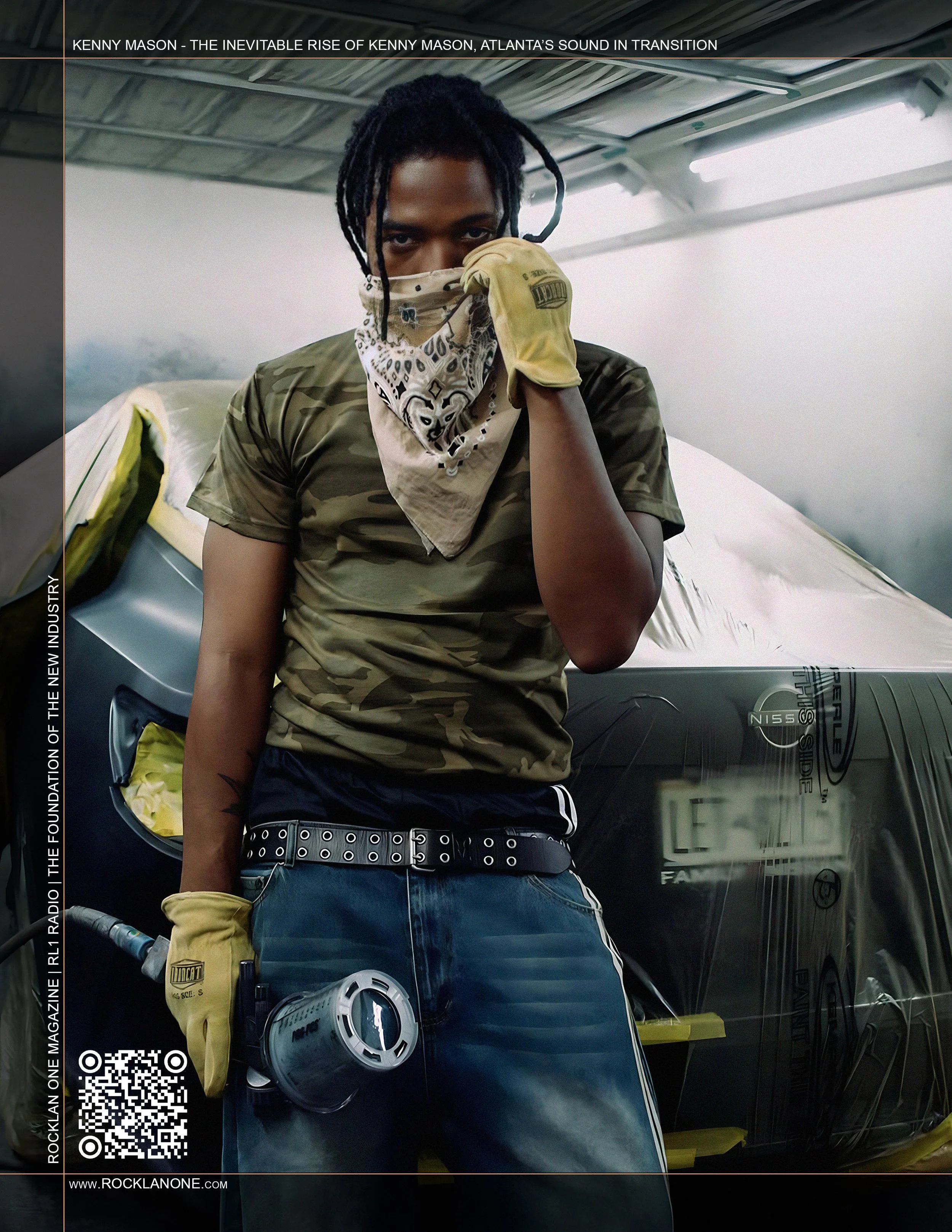
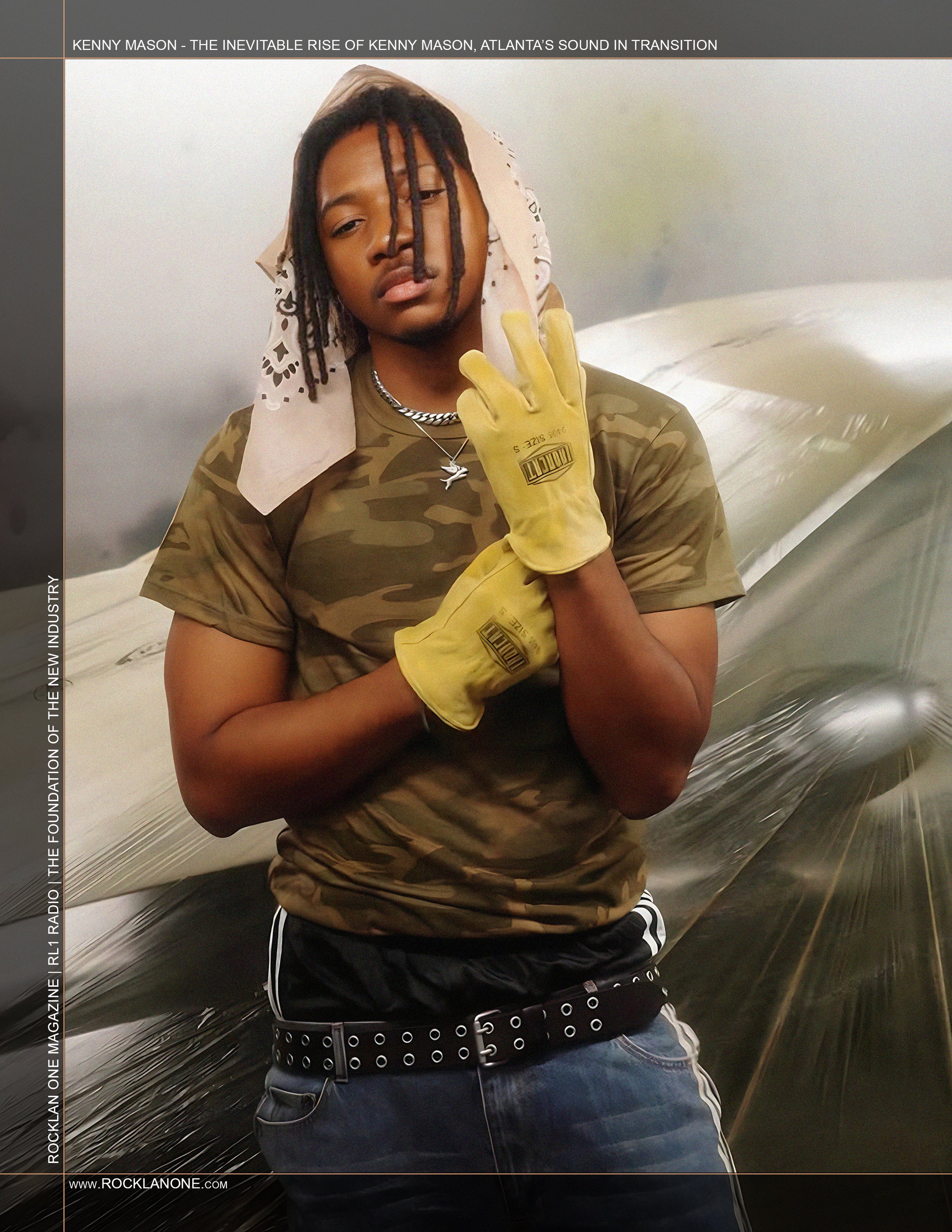
The Inevitable Rise of Kenny Mason, Atlanta’s Sound in Transition
Kenny Mason builds music to be felt, not categorized, turning emotion, chaos, and clarity into a shared live experience.
RockLan One Editorial
The Introduction, Atlanta Unfiltered
When rapper and songwriter Kenny Mason released his debut single “Hit” in 2019, it did not arrive as a bid for acceptance. It landed as a statement of presence, a deliberate magnification of an Atlanta that many outside the city never see. The song opened with the voices of adolescent scammers plotting their next move, immediately grounding the record in survival rather than spectacle. Mason followed in breathless double time, rapping about hustling for his next meal and doing everything short of working a conventional job. The energy felt raw, urgent, and unfiltered, a reflection of the environment that shaped him rather than an image crafted for industry comfort.
The video reinforced that intention with surgical precision. Mason wore an Atlanta Braves jersey and dirty sneakers, leaning out of the side of a moving car as it rolled through the working class streets of the West End. There were no luxury cars, no mansions, no aspirational distance between artist and surroundings. It was Atlanta as lived, not Atlanta as advertised. In an era where many rappers celebrated the city’s long run of dominance through extravagant visuals and unattainable wealth, “Hit” chose familiarity over fantasy. That honesty did not earn radio rotation, but it resonated deeply, eventually surpassing five million YouTube views and quietly cementing Mason’s name in the underground.
Building a Foundation, Music for Everybody
The impact of “Hit” was immediate and organic. Mason recalls performing the song at a handful of underground shows and watching crowds learn the lyrics before the record was even officially released. That response affirmed his instincts and solidified his direction. He did not want to represent only himself, he wanted to represent everybody who stood in the same spaces he came from. That philosophy became the foundation of his career rather than a momentary stance.
When his debut album Angelic Hoodrat arrived in 2020, it revealed an artist uninterested in narrowing his scope. His growing fanbase, known as the pups, connected to the way his music balanced vulnerability and aggression without apology. Each project unfolded like a series of emotional swings, shifting between introspection and adrenaline with ease. By the time 9 was released in March 2024, those contrasts had become central to his identity. His catalog did not aim to soothe or shock alone, it aimed to reflect the full range of lived emotion.
Performance as Cinema, Feeling Over Thought
Kenny Mason’s live performances mirror the architecture of his music. His shows feel divided, one half of the room reciting lyrics with near reverence, the other crashing into each other in mosh pits fueled by release and chaos. These shifts are not accidents, they are intentional movements designed to keep audiences emotionally engaged. The pendulum swings constantly, forcing listeners to experience the music rather than simply observe it. Each performance becomes a shared emotional space rather than a passive concert.
Mason describes himself as a movie buff, and that influence is deeply embedded in his approach. He draws inspiration from film dialogue and cinematic pacing, treating each song as a scene rather than a standalone record. His narrative driven visuals support that philosophy, adding layers to the music without explaining it outright. He wants the audience to feel like they are inside the experience, similar to sitting in a dark theater absorbed in a story. The goal is subconscious connection, something that hits before thought has time to intervene.
Sound Shaped by Collision, Rap Meets Rock
Mason’s musical subconscious was shaped early in life riding in the back seat of a car, absorbing the voices of 2Pac, T.I., and Lil Wayne through his father’s speakers. Those artists taught him rhythm, storytelling, and conviction. As he grew older, his world expanded through video games and endless YouTube searches, leading him to bands like Deftones, Smashing Pumpkins, and My Bloody Valentine. These discoveries introduced texture, distortion, and emotional openness that would later become essential to his sound. The collision of these worlds created something that never fit neatly into one genre.
Despite growing up in what many consider the rap capital of the world, Mason’s earliest dream was not centered on rapping. He wanted to be a guitar player, inspired by the idea of becoming a Jimi Hendrix type figure who made songs without boundaries. At thirteen, he began taking guitar lessons, but financial limitations cut that journey short after only two sessions. While the lessons ended quickly, the impact lingered. Those brief moments opened his mind to creative possibilities beyond what he saw around him.
Environment and Imagination, Atlanta’s Reality
Raised moving through South and West Atlanta neighborhoods often highlighted in studies about economic opportunity gaps for Black children, Mason’s world felt narrow at times. In his environment, he mostly saw people pursuing sports, rapping, or trapping as viable paths. Today, two guitars sit in his home studio, occasionally picked up, serving as quiet reminders of what curiosity can unlock. They represent the idea that creativity does not need permission to exist. For Mason, imagination became a way out before music ever became a career.
Born in 1996, the same year Outkast released Southernplayalisticadillacmuzik, Mason has never known an Atlanta where rap was not a legitimate profession. In this city, rappers are civic figures as much as entertainers. Gucci Mane has spoken at middle school career days, Killer Mike has served on mayoral transition teams, and T.I. operates a museum dedicated to trap music while teaching the genre at Clark Atlanta University. With the rise of Migos and Future during his formative years, pursuing music never felt unrealistic. It felt like a continuation of Atlanta’s lineage.
The Underground Years, Learning to Win the Room
Unlike many of his peers who focused on appealing strictly to rap audiences, Mason sought out every kind of room available. He performed across Atlanta’s underground circuit at spaces like 992 Gallery, Mammal Gallery, Music Room, Rowdy Dowdy, and Department Store. Each venue demanded adaptability, forcing him to learn how to connect with audiences who did not automatically accept him. One night felt like the raw tension of 8 Mile. The next felt like the theatrical energy of Purple Rain.
Mason admits that while he was confident in his songwriting, he had to learn how to perform for crowds that initially doubted him. Winning those rooms sharpened his instincts and built resilience. That experience translated to bigger stages later in his career. He went on to perform at Lollapalooza, join J.I.D. at Governor’s Ball, and open for Danny Brown and JPEGMAFIA on the Scaring the Hoes tour. Each opportunity reflected years of preparation rather than sudden luck.
Slow Burn, Longevity Over Hype
That versatility, however, slowed Mason’s path to mainstream recognition. Compared to hometown contemporaries with instantly identifiable sounds, he exists between worlds. He acknowledges that tension openly on “Facts,” where he raps about confusion as the cost of movement. Rather than resisting the ambiguity, he embraces it as proof of progress. Confusion, in his view, signals growth.
Producer Coupe, a frequent collaborator who has worked with 21 Savage and Young Nudy, believes Mason’s rise is intentional. He sees Mason building a catalog meant to grow alongside him rather than spike and fade. In his eyes, Mason’s trajectory mirrors artists like J. Cole or Kendrick Lamar, slow building, deeply rooted, and durable. Coupe argues that Mason’s rare ability lies in balancing drippy production with lyrical depth. That balance positions him for longevity rather than momentary success.
Genre as DNA, Not Limitation
For Mason, genre is fluid rather than fixed. He believes all music shares a core DNA that transcends labels. The emotional reason someone connects with one style can exist just as powerfully inside another. That belief has led him to collaborate across sonic boundaries, from Project Pat to Toro y Moi. Each collaboration reinforces his role as a bridge rather than a box.
Atlanta itself appears ready for that kind of bridge. In recent years, Andre 3000 stepped away from rap, while Young Thug saw his output halted by legal troubles. With defining innovators absent and the city continuing to diversify, space has opened for a new voice to reshape the sound. Killer Mike describes Mason as the totality of a Black kid raised inside Atlanta’s city limits, capable of mastering rap while defying expectation. To him, Mason represents where Atlanta is headed, not where it has been.
Education and Expansion, The NCEG Connection
Mason’s journey also intersects with education and artist development through his connection to National Collegiate Entertainers Group. As an alumnus and featured artist, he has partnered with NCEG on meet and greets and concerts at Georgia State University and The Buckhead Theatre. These events showcased his path from college creative to professional artist. NCEG’s mission to bridge education and opportunity mirrors Mason’s own story. His success stands as proof that institutional support and independent creativity can coexist.
The Pup Pack Era, Work Without Pause
In 2025, Kenny Mason remained relentless. He released Pup Pack: 1st Shift in November, followed by Pup Pack: 2nd Shift in December, alongside singles like “Loyalty,” “Burn It Up,” and “A1.” The projects expanded the Pup Pack universe while reinforcing his rock infused rap foundation. Tracks like “Diamonds” and “Gorgeous” highlighted reflection, growth, and confidence earned through patience. Rather than chasing a hit, Mason focused on building continuity.
The Inevitable Arrival
Kenny Mason is not in a rush to arrive. He understands that longevity requires patience, intention, and consistency. Comparisons to established superstars and labels like underrated or next to blow do not weigh on him. He takes them as signs that people see him in conversations reserved for artists who endure.
For RockLan One Magazine, Kenny Mason represents the future of Atlanta artistry. He is rooted in reality, fearless in experimentation, and committed to growth over hype. The mainstream will catch up when it is ready. He is already moving forward.