
J.I.D
-
NO REST, ONLY GREATNESS AHEAD
-
J.I.D - NO REST, ONLY GREATNESS AHEAD -
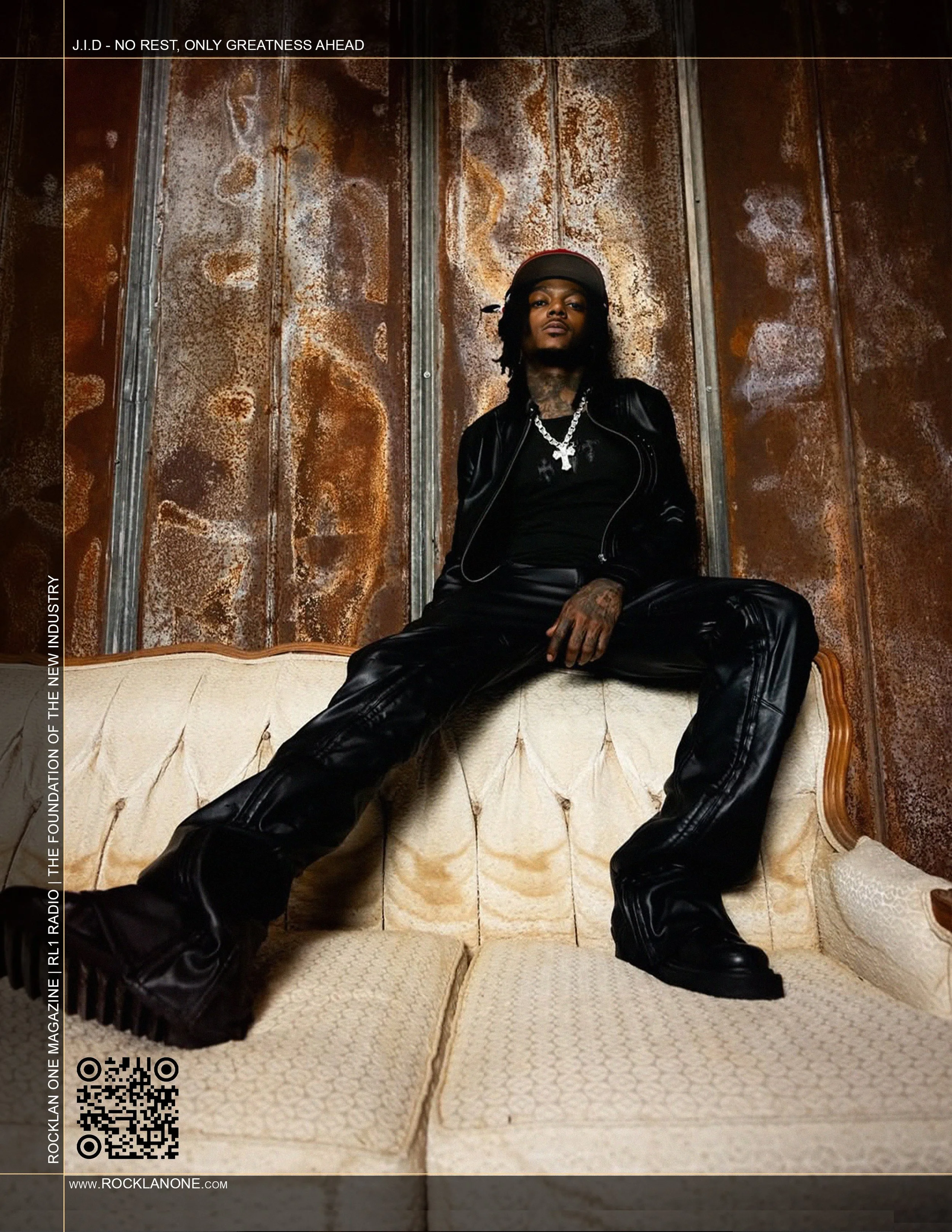
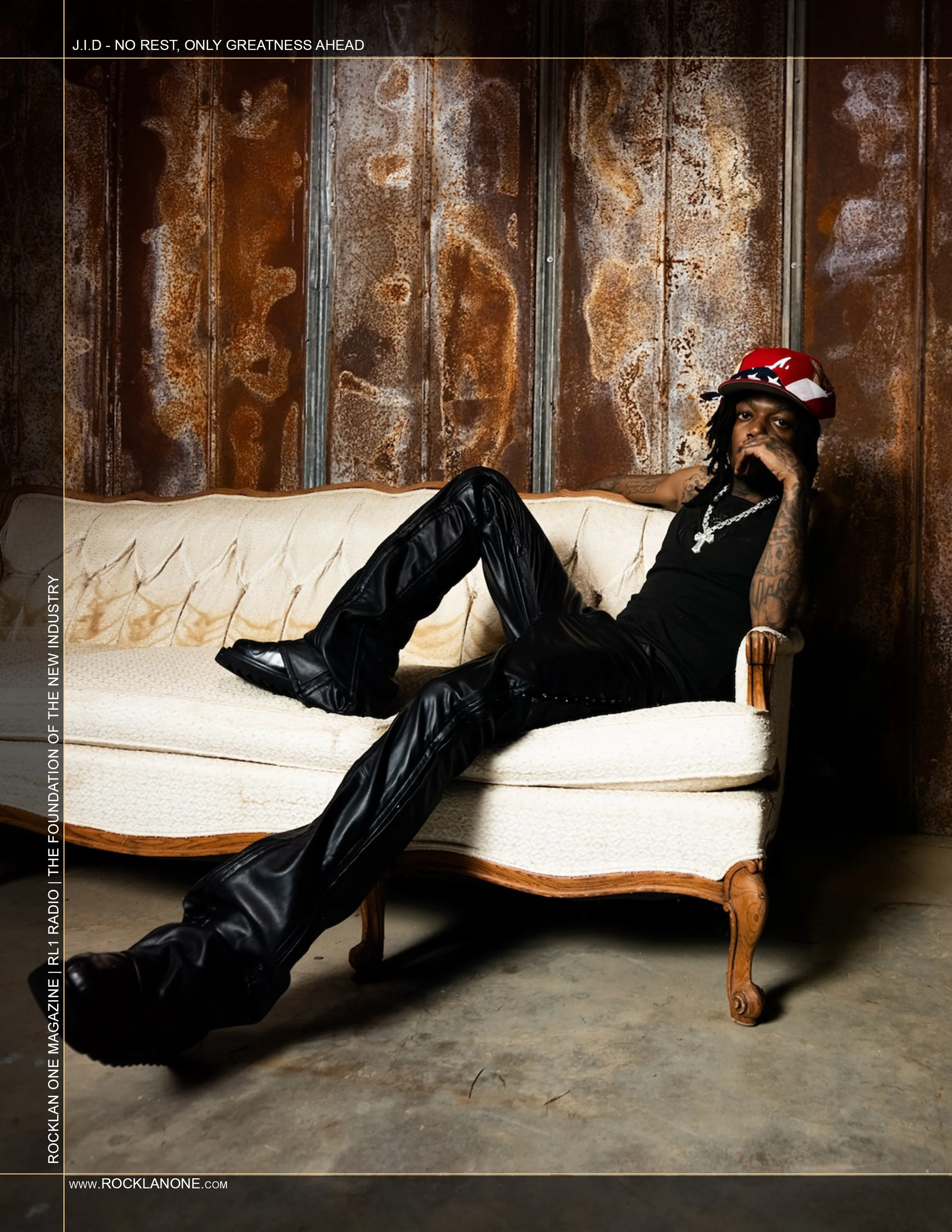
JID: No Rest, Only Greatness Ahead
The Atlanta artist is one of the best rappers in the world right now. As he releases his fourth album, God Does Like Ugly, we trace the relentless drive and sharp vision that brought him here.
RockLan One Editorial
At 34, JID is standing at a defining point in his career, a moment where his past grind and future ambitions collide. He has four acclaimed albums, billions of streams, and a reputation as one of hip hop’s most technically gifted wordsmiths, able to bend syllables and ride rhythms with unmatched precision. Beyond the stats, his influence echoes in underground cyphers and global stages alike, positioning him as both a student of rap tradition and one of its sharpest innovators. If you ask him when he last slowed down, his answer is blunt and unwavering: “I haven’t been to that place. That’s for when I retire.”
That tireless ethic is the backbone of God Does Like Ugly, JID’s fourth studio album and the boldest statement of his career to date. Inspired by his grandmother’s phrase that “God don’t like ugly,” the project debuted at No. 11 on the Billboard 200 and immediately sparked conversations about his versatility and vision. The album is propelled by a sprawling soundscape of trap, boom bap, juke, and soul, each style stitched together with his sharp lyricism and fearless experimentation. Across its 15 tracks, he raps with surgical precision, sings in Spanish, and unpacks deeply personal stories that balance raw faith with sharp social commentary. From addressing systemic struggles to sharing intimate reflections on family, JID crafts a body of work that feels both deeply grounded in Atlanta and resonant worldwide.
A Relentless Creative Machine
JID does not just hand in singles when asked, he delivers universes. When his label requested two singles to launch the project, he turned in a fully formed four track EP (GDLU: The Preluxe) featuring Eminem, Lil Yachty, and 6lack. Eminem’s verse came back calm and without fuss, a simple yet powerful sign of mutual respect between two lyrical heavyweights. The Preluxe gave fans an early taste of the range of sounds and collaborations to expect, setting the stage for the album’s ambitious release. By the time God Does Like Ugly arrived, the Preluxe and the album together already totaled 20 songs, showing JID’s hunger to flood the culture with music. And he is not finished. JID teases that this era could eventually swell into a 50 song body of work, a sprawling universe of verses, flows, and stories that prove his work ethic and imagination have no ceiling.
“The chip is still on my shoulder,” he admits, his voice carrying both grit and reflection. “But at the same time, I just tried different writing styles and approaches. I slowed the pace down, got more thoughtful, more spiritual. I wanted to stretch myself beyond just technical rapping and dive into emotions, faith, and vulnerability.” He describes this shift as a deliberate evolution, a chance to show fans that his artistry can reach new heights, painting bigger pictures while still delivering razor sharp rhymes.
Indeed, religious imagery runs throughout the project and it gives the music a weight that feels larger than the beats themselves. On “Of Blue” (with Mereba), he raps: “God gives the heaviest loads to the strongest soldiers.” That line becomes a mantra for the album, one that acknowledges the pain and resilience woven through his life. Elsewhere, he unpacks the contradictions of chasing the American Dream while his own family wrestles with incarceration, as his brother has been in and out of jail his entire life. He is unafraid to shine a light on the personal toll of systemic injustice, using his platform to merge faith, grief, and determination into something both inspiring and unflinching. By doing so, JID transforms his struggles into testimony, pulling listeners into a narrative that is as relatable as it is uncompromising.
Atlanta Roots, Global Reach
The album’s depth is tied to JID’s Atlanta roots, which he carries like both a badge of honor and a call to action. On “VCR” with Vince Staples, he invokes the haunting history of Oscarville, a thriving Black town destroyed by racial violence before being drowned by Lake Lanier. The reference is not just historical trivia, it is a reminder of the buried stories that shape Atlanta’s identity. “The reek of slavery is still present in Atlanta,” he says. “It definitely drives me.” By embedding these references into his music, JID ensures that listeners feel the weight of the city’s legacy alongside its cultural brilliance, creating songs that are as educational as they are electrifying.
But his perspective is global. From dropping DiCaprio 2 in South Africa and watching the energy in Cape Town and Johannesburg explode, to stepping on stages in Asia where entire crowds rap his lyrics word for word, JID has seen his reach transform into something larger than music. Fans treat his catalog like scripture, chanting every bar back to him with passion. The devotion feels less like a casual following and more like a cultural movement that crosses borders and languages. Unlike many artists chasing chart positions or viral moments, JID refuses to play the “stream game.” His metric of success is simple yet powerful: “asses in seats.” To him, the true measure of artistry is the ability to fill venues across the globe and create unforgettable nights of music and connection.
Building From the Ground Up
This fall, he will launch the God Does Like World Tours, a massive run that signals the next chapter in his rise. Young Nudy will join him on all U.S. dates, while Mick Jenkins will hold down the European leg and Jordan Ward will bring his energy to Australia and New Zealand. Asia dates are still to be announced, keeping global fans on edge with anticipation. The North American run begins October 15 in Virginia Beach and closes December 16 in Brooklyn, with stops in major markets like Chicago, Los Angeles, Houston, Miami, and Philadelphia. The centerpiece is his first ever headlining arena show in Atlanta, a hometown coronation that feels like the reward for a decade of grinding. Each stop will not just be a concert but a celebration of the community he has built, a chance for fans to witness his evolution from small clubs to sold out arenas.
“I remember touring for 20 people,” he recalls with a grin, reflecting on nights when the crowd was barely bigger than the opening act’s guest list. “Then it became 100, then 500, and every time the rooms grew a little louder, a little fuller, I felt the progress.” He describes those years as the proving ground that shaped his stage presence and taught him resilience. “It takes time, and it takes patience, but you just keep putting the work in. Those nights built the foundation for everything I am doing now.”
That foundation is why he can now dream of packing arenas with 15,000 loyal fans a night, a vision that has become his ultimate benchmark for success. He speaks about it with a mix of hunger and humility, knowing how rare that level of consistent support is. “If I could do that every night,” he says, “you would never hear from me again. I would just drop albums for those people.” For JID, those packed houses would not only validate the years of small crowds and long tours, they would represent a family of listeners who have grown with him, turning every show into a moment of history.
A New Role on the Horizon
Yet, for all his momentum, JID is already eyeing another mountain that lies outside of music. By age 40, he wants to pass the bar and become a lawyer, a dream fueled by his brother’s lifelong incarceration and the toll it has taken on his family. “I have always had good verbiage and dialect,” he says with a mix of confidence and humility. “I want to get more knowledgeable, work on cases, and figure out the system.” The idea is not just a passing thought but a mission, an extension of the same drive that pushes his music. He envisions himself advocating for change, studying the law with the same intensity he brings to his lyrics, and ultimately stepping into courtrooms to fight the injustices he has witnessed firsthand. “It is a mountain to overcome, but…” he shrugs, as if already prepared to climb it.
Whether in court or on stage, JID thrives on effort and embraces challenges with unshakable resolve. God Does Like Ugly may be an album about burden, but JID transforms that weight into fuel, turning obstacles into anthems and struggles into strength. He makes heavy lifting look effortless, inspiring fans to believe that persistence and purpose can overcome even the most daunting trials.